It is difficult to select trainees to become future neurosurgeons. We should pick young people with so much dedication, determination and full of energy that one day they will become far better than what we are. In my departments, this selection has mainly been based on my foresight that, one day, this particular young person will amaze me with both creativity and skillful performances. I hope that with time some of these youngsters will become the best neurosurgeons in the world, at least in their home countries to serve the people well.
They must be young, below 30 years of age, because the learning period is long, a whole lifetime. They must be intelligent, flexible, they must get well along with very different people. At the same time they must have a somewhat stubborn and tenacious character to fulfill their goals, often against the wishes of other people, sometimes even the chairman. They must be able to travel, and they must be fluent in the main languages of the international neurosurgical community, English, so as to be able to visit departments all over the world to learn new ideas and techniques. They have to be hard working and have good hands, irrespective of their glove size. They should have no tremor in their hands, or if the initial tremor in the beginning of surgeries, does not disappear in six months or so, they should do something else like neurology, endovascular surgery or psychiatry. It is extremely helpful to be in good physical and mental condition, by doing some sports or other hobbies which help to quickly recover from the many failures and complications encountered in everyday work.
A good healthy sense of humor helps, and it is important to have the support of the family or good friends in all the daily joys and sorrows. Cynicism and black humor alone, will probably not be able to carry someone through the years of hard work, rather he or she will experience burn out sooner or later, and give up neurosurgery. The new trainees must realize from the early beginning that reaching a high professional level comes at the expense of long working hours and one is never truly free from the work. If possible, they should transform their work also into their hobby as that helps in maintaining the interest in the field for long periods of time, until retirement or even longer.
I would like to share some of my thoughts and reflect on some of my experience about the issues a young neurosurgeon should be aware of and maybe give little advice on how to overcome some of the difficulties.
READ AND LEARN ANATOMY
To become a better microneurosurgeon, one should constantly study anatomy of the brain as better knowledge of microsurgical anatomy leads to better surgery. With beautiful CT, MRI and angiography images besides videos of today, learning central nervous system anatomy is far easier than in the times of PEG, ventriculography and surgery without a microscope. Reading the many textbooks available gives us the opportunity to share the accumulated experience of several generations of neurosurgeons. My teacher in anatomy, Professor Gian Tondury in Zurich was shouting the following sentence in his lectures: “Medical study is a life-long study, anatomy even more.” Preparing yourself for some new or infrequent operation by reading, and nowadays observing the many operative videos present around us, means that during the actual surgery your hands will be guided by those who had previously accumulated much more experience on this particular procedure. By reading and observing operative videos frequently you may save, first and foremost, your patient, but secondly also your time and your nerves. It is not enough to learn the anatomy once, rather, one is forced to revisit the same topics over and over again before acquiring appropriate expertise in the matter. Reading is hard work-and learning anatomy is even harder. It is a lifetime job, or more.
TRAIN YOUR SKILLS
Neurosurgery is not different from any sports or arts; only hard practice gives good results. Go to the microsurgical laboratory to dissect animals and cadavers if possible. Knowing anatomy and the different tissue properties results in better surgery. Train your hands in the laboratory setting in increasingly demanding tasks. Operating under the microscope should be started in a safe laboratory environment with enough time to familiarize oneself with all the instruments, devices and techniques, not to mention to develop the necessary hand-eye coordination. Many of the movements we perform with our hands under the large magnification of the microscope should become automatic, without the need to concentrate on them, like e.g placing microsutures. Practice special tricks in handling difficult situations, atraumatic manipulation of different kinds of tissues including the tiniest arteries and veins, dissection of important vascular and neuronal structures, and understanding the 3D relationship of different structures. It is possible to train most of the steps for any operation whether for vascular, tumor or spinal surgery in the laboratory setting. Not necessarily as a single procedure but as a collection of different techniques.
SELECT YOUR HEROES
When beginning your career, select your own heroes. They may be in your own institute, or far away, in other parts of the world. While I was visiting the maestros and sitting as an observer in the corners of various cold operating rooms around Europe and North America for altogether more than two years during my early career, I always dreamt of the day that would be doing the same kind of high level microsurgery. During the first one of my numerous visits to Professor M. Gazi Yasargil nearly 40 years ago, a young Mexican neurosurgeon Jesus Martinez told me "One day we might do even better!” At that time I found it hard to believe him, as he was so much better than anyone else in the world, like Mohammed Ali or Usain Bolt have been. But now, with retrospect I know that he was right. The same happens in sports, arts, and technical developments, the younger generations do better as they can stand on the shoulders of older ones. Or not only stand - they should begin their quest from a new starting point, the point where these earlier giants finished.
When planning your career, find a senior neurosurgeon to mentor you. While you will need the help of many different people, try to find one to whom you can tell about your failures, fears, plans and hopes. He or she does not have to be the chairman of the institute, but he or she should be the one who has a great soul and understanding of life and neurosurgery. Without the help of a good tutor, mentor it is extremely difficult to become a skilled microneurosurgeon, and almost impossible to make a real academic career.
KEEP FIT
Keep your body fit with regular exercise. Doing several hundred operations a year is both physically and mentally demanding, so try to find hobbies outside of the operating room to balance it out. This is easily said, at least I have had big difficulties to follow these rules. You should do everything you can to avoid fatigue, burn-out and cynicism towards your work. Remain a fighter, never give up; if you were thrown against a smooth wall, you should hold to it with fingers and nails like a cat. Keep up with mental training all the way throughout your career. Neurosurgery remains a hard contact sport. Even close to or after your retirement you can still be useful, as you can continue to share your experience with younger neurosurgeons. With age you will slow down; you should respect this and behave accordingly. But neurosurgical skill and experience remain, something which is difficult if not impossible to achieve in a short time. Experienced neurosurgeons, unlike experts in e.g. the information technology field, are not pushed aside as easily by the next generation. Ars longa,vita brevis, occasio praeceps, experimentum periculosum, iudicium difficile.
BE A MEDICAL DOCTOR. TAKE RESPONSIBILITY!
Be a medical doctor when treating your patients! Don't hide behind the back of other neurosurgeons to save your own face. You have the responsibility for the patient, not for your untarnished surgical series. Within a busy institute one can easily build up a reputation of excellent surgical results by avoiding the high-risk patients and passing them on to others. With extreme selection of suitable cases, many patients will be excluded and die without ever being given a chance to survive-and this only to save the good outcome figures for one’s surgical series. Superficial analysis of results from some institution may give you the wrong picture regarding the skills of a particular neurosurgeon, the one with the worst results may actually be the best, as he or she may be tackling the most difficult cases, thus facing the most difficult complications.
LEARN YOUR BEST WAY OF DOING YOUR SURGERY
Find your own best way to work, select your (few) favorite instruments (like e.g. the "little thing", i.e. a small dissector used by Dr. Drake to push aside the aneurysm dome) and trust them. Be open to new techniques and instruments. Try them out and if you find them good, adopt them. As Dr. Drake said, "much of the merit of an approach is a matter of surgical experience”. He advised to make operations simpler and faster and to preserve normal anatomy by avoiding resection of the cranial base, the brain or by sacrificing the arteries and veins. All this results in better outcome for the patients, the only thing that really matters. You should try new treatment methods if you suspect that they might beat the old ones. But while reading various reports on new techniques with excellent results, be critical and believe your own figures; after all it is you providing the treatment, not the author of the publication. Furthermore, don't change your methods if you are performing well.
A clear evaluation of your own skills could be stated in the following way: "Would you feel safe to be operated on by yourself?" If not, develop your skills further, study and learn from those who are better! In my opinion, with a more active approach towards microneurosurgery, intensive care, imaging, rehabilitation and changes in mental attitude, we have made significant progress as compared to the 1970’s, the time when I started my career. The annual number of operations per neurosurgeon has clearly increased. We have become more efficient, and the work, which is done well at a brisk pace, with greater experience, usually results in better outcome. In a way, I must agree with Jehovah’s witnesses, clean surgery without blood loss is the fastest and safest way for the patient, and also for the staff.
OPEN DOOR MICROSURGERY
Go to congresses, give lectures and participate in discussions. But in addition you should also visit different departments, both home and abroad. You should leave your own comfort zone, and go outside to learn. Lectures in congresses give only a simplified picture of the actual level of neurosurgery at a particular institution. Unfortunately true results are often worse than those presented. Accept visitors. When doing so you get a great chance to learn and to be criticized by intelligent people who may have quite a different experience and different ways of thinking. With the constant presence of these observers you will be forced to perform on a much higher level than if you were operating just by yourself. Since 1997, I have been privileged to have a large number of excellent international fellows and visitors, who have taught me often more than what I felt I could teach them. Question, argue and discuss your daily routines. Tolerate different people and innovative thinking, but also stick to your old habits if proven good. When you go to visit neurosurgeons with excellent or new skills, you may learn much more in a few days than from traveling to tens of congresses and listening to hundreds of presentations. When traveling, try to adopt all the good things, even the small details. Of course, this is not always possible due to economical, religious, or other factors that, perhaps, may be even related to your own surgical skills. You should travel throughout your career, as a resident, as a young neurosurgeon, and even later on as an already experienced specialist - you are never too old. Nowadays observing the many videos by excellent neurosurgeons play a big role, but remember they might be heavily edited, and not always tell the actual truth. Try to remain enthusiastic about learning new things, but remember that hard work and suffering is also a part of the learning process.
RESEARCH AND KEEP RECORDS
Remain critical towards your own results; that is the only way how to improve. Analyze your own cases immediately after the surgery; "why did it go so badly, why was it so smooth? “ Write it down in your operative notes, track sheets or database, but make sure to record your findings. Our memory is short, only a few months or even less if the number of cases is high. You should not be desperate if you don't have the top facilities, because it is the actual work that counts the most. The paper track sheets of Drs. Drake and Peerless, primitive from the present perspective, could still serve as a testimony of surgical experience and techniques for the upcoming generations.
Make videos and photographs, analyze them, draw if you can, and discuss the cases with other neurosurgeons, residents and students. When recording your operations, you will find that you end up doing better and cleaner microneurosurgery. Analyze your cases also in your mind in the evenings or even during the sleepless nights. Perform mental exercises in how to prove your surgery, which moves to omit or to add. Share your experience with others, especially with younger people, and speak openly about your complications. Being open means honest surgery, and the truth always helps the patient. Dr. Drake, my teacher said: “You have to be so honest that it hurts.”. And it really hurts, in my experience. Do not brag in advance about how simple a particular case will be ("even my mother could do it...") as in this very same case you may end up having the most surprising and horrifying complications.
Dr. Drake stated in his book on vertebrobasilar artery aneurysms: "If only we could have back again many of those who were lost or badly hurt, for a second chance in the operative room with what we have learned.” With an individual patient we cannot have a second chance, but this chance is given to the next patient if we keep all of our experience in our memory and databases, analyze it and use it well.
FOLLOW UP YOUR PATIENTS
You should keep track of your own results. Follow up your patients with postoperative checkups on a regular basis, with outpatient visits, letters, telephone calls, and hospital records and add this follow-up data to your database. You should have your own personal small databases to keep track of your own surgical skills only fair to your future patients if you know what the risks are of you performing a particular operation. If there is somebody close by who can do it better, let him or her operate on the patient, and meanwhile enhance your skills by observing, reading and practicing in a laboratory. You should not settle for mediocre results, always aim for the best standards of treatment. Mistakes happen, but don't make the same mistake twice. Discuss and analyze your cases with others, ask for advice to avoid future complications or disasters.
WRITE AND PUBLISH
Publish your results but don’t publish everything! We should remember Francis Bacon’s (1561-1626) words, cited on the first page of Dr. Drake‘s book “Every man owes it as a debt to his profession to put on record whatever he has done that might be of use to others”. “One or two good papers a year in good journals are enough” was Dr. Drake‘s advice. In the present explosion of knowledge we should be very critical about what is published; only high quality data with good analysis and proper message. When publishing, we should look for relevant literature and not neglect the original works of the pioneers or the most important works on the subjects. Writing and publishing is hard work, it has to be practiced in the same way as surgical skills. The true skills come only with time and numerous publications. Excuses like “I’m too busy with my clinical work to write...” are out of place. In neurosurgery, everybody is generally busy with his or her clinical work, which is the reason why writing is so hard. But despite the difficulties, writing is time well spent. Before putting any ideas on the paper, one is forced to analyze the problem to the smallest detail so that it can be communicated to others in a simplified and condensed way, often resulting in new ideas. The other advantage that comes from writing is that one becomes also a much better and more critical reader, who is able to distinguish a good publication from a poor one at a glance. Finding the proper balance between writing and actual clinical work is one of the most difficult tasks in academic neurosurgery.
KNOW YOUR PEOPLE
We are not alone when doing surgery. Treat all your staff members, such as anesthesiologists, neuroradiologists and nurses, well. Know their names, be familiar with their strengths and weaknesses, and adjust your surgery to the team you have available at that very moment. If the team is less experienced, as is often the case during the night, you must weigh the risks and benefits of doing a particular procedure at that time as opposed to doing it some other day with a better-qualified team. Many things affect your work: patients, their relatives, nurses in the OR, intensive care and bed wards, other neurosurgeons, anesthesiologists, other surgical specialists, referring doctors, administrative people, politicians, the society, and even your international colleagues. You will establish your reputation based on many factors, not only the success in surgery. Good reputation is hard to build, it takes years and years of work, but it can be swept away in a short instant if you drop your standards. On the other hand, with good reputation one can withstand many difficult situations and complications as long as the level of work is kept at the highest possible level. You must continuously monitor your own work: postoperative angiograms, CTS, and MRLS should be ordered and analyzed by yourself and your staff, otherwise someone else will order them. It is technically much easier to e.g. replace an aneurysm clip soon after a failed clipping or to remove a small tumor remnant observed on a postoperative image, compared to the abhorring thoughts of all the dangers and psychical stress to the patient if it has to be done after a longer period by someone else In order to avoid malpractice charges one of the key points is to be open and honest, and to carry out postoperative controls.
ATMOSPHERE
The atmosphere in the department should be open and supportive of good work, and the employees should be proud of their clinic. Internal education of young doctors and nurses is a must; they will better understand the whole workflow of the department and they will become more open to helping their colleagues in need. Be honest! The staff has the right to know what happened to patients who experienced complications; otherwise rumors will destroy the atmosphere.
We should know our own people, be kind but demanding. Do it in your own personal way, not in the ways some consultants or books on administration tell you to do. Express your appreciation of your hard working colleagues; pay them well if you can. It is a pity that in the socialized system of Scandinavian medicine this is seldom possible. Many neurosurgeons are passionate workers by nature, but being paid enough is also important. But above all, try to be a role model of a hard working professional who takes justified pride in his or her own work and who is continuously trying to improve his or her work.
LIFE IN NEUROSURGERY
“You are not famous”, said Professor Yasargil to me when visiting Helsinki 20 years ago. I thought: "Maybe not famous but good...”, to contain my self-confidence, did not speak out my thoughts. I do know all aspects of the difficulties related with working in a small country - but also its benefits.
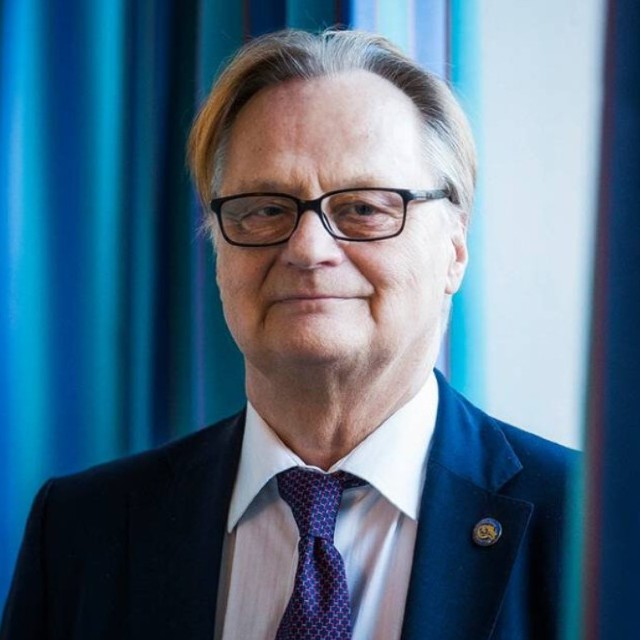
I was born in 1947 in a very small village of Niemonen, a part of Kannus in Ostrobothnia, Western part of Middle Finland. My father spent 5 years of his youth as a soldier in the Second World War, when Finland was attacked by the former Soviet Union. Later he became a teacher and our family settled down in Ruovesi, a small beautiful country village 250 kilometers north of Helsinki where I went to school.
I decided to become a medical doctor back in Ruovesi due to the influence of Dr. Einar Filip Palmén, a general practitioner (1886-1971), who treated alone all the 10,000 people living in this area for 50 years. We became friends through hobbies, like collecting stamps, coins and butterflies. I was also doing gymnastics, and my heroes were Boris Shakhlin from Soviet Union and Yukio Endo from Japan. Later as a schoolboy, I went to work in a factory in a small German city called Lünen, and I noted that I have very quick and skillful hands. During this stay, I also hitchhiked to Austria and Switzerland, and visited Zürich for the first time. At that time I had no idea how much influence this town would eventually have on me.
After I graduated from high school in 1966, I applied to the Medical Faculty in the University of Helsinki but failed. Looking back, this turned out to be the best thing that could have happened to me at that time. I had to go to study elsewhere, so I applied to study medicine in Zürich, Switzerland. In Zürich I became a real European, even an international person. I learned to work hard in a Swiss and international way, and I saw the value of detailed knowledge of anatomy. I still regularly study the book of Topographical Anatomy by Professor Gian Töndury, even though it is more than 50 years since I opened this book for the first time. During my studies, I worked for more than two years at the Brain Research Institute led by the hard-working Professor Kondrad Akert, focusing on experimental neuroanatomy. Not only did I see the high level of basic research, but even more importantly, I learned how to use an operating microscope, OPMI1. Furthermore, I also learned some broken English in this very international team.
Eventually, I realized that basic research was not for me, and so, after attending the lectures of Professor Hugo Krayenbühl and Professor M. Gazi Yasargil, I decided to become a neurosurgeon. I asked Professor M. Gazi Yasargil if could join his team in Zürich. He accepted my request. But at that time, after having spent nearly seven years in a foreign country, I became very homesick, so that I had to forget my plans about joining Professor M. Gazi Yasargil, and moved back to Helsinki instead. This was providential as two of my Scandinavian friends could not manage the demanding training in Zürich clinics. Why did I end up in neurosurgery? My second interest, cardiac surgery, necessitated first training in general surgery, and this seemed way too long for me before entering cardiac surgery itself. But one thing I adopted from cardiac surgery, a one-hand knot I learned from the great cardiac surgeon Professor Ake Senning in Zürich. I still use this knot when operating under the microscope. Psychiatry, a third interest of mine, made me attend the famous Manfred Bleuler's lectures but practice in psychiatry in Finland and elsewhere proved ultimately to be not very attractive to me.
So eventually, I started my neurosurgical training in Helsinki in 1973 under Acting Professor Henry Troupp, June 1st, 1973. The former professor Gunnar of Bjorkesten had retired because of serious illness and died in January 1974.
In 1966-73 even we, the very beginners at the Zürich University, were aware that something very special was happening in neurosurgery, the rapid development of microsurgery by Professor M. Gazi Yasargil. As many neurosurgeons in the world, I have been a student of his for more than three fourths of my life, even if I was living very far away for most of the time, but at the same time, living so very close, as I was learning from him and his work. Already as a medical student I was aware of my geographically even more distant heroes in Canada, Profs. Charles G. Drake and Sydney J Peerless, but it took a long time before I had the opportunity to visit and work with them. Some other international neurosurgeons who have influenced me in many ways are A. Konovalov, Vinko Dolenc, C.F. Tulleken, Y. Yonekawa, H. Sano and R. Spetzler. Besides these giants I have found also younger heroes, and I try very hard to learn and develop all the time with them, like Ali Krisht and Ugur Ture, Aki Kawashima from Tokyo, and Xu Bin from Shanghai. A special credit I give Mrs. Rosemarie Frick, who runs an experimental laboratory for practicing microsurgical techniques in Zürich. Domestic colleagues who have been most influential on my present practice in many different ways have been (in alphabetical order) Drs. Olli Heiskanen, Lauri V. Laitinen, Stig Nyström, Seppo Pakarinen, Henry Troupp and Matti Vapalahti. Outside of neurosurgery, Drs. Erik Anttinen (psychiatry and neurology), Viljo Halonen (neuroradiology), Eero Juusela (Gl-surgeon), Aarno Kari (ICU), Markku Kaste (neurology), Ulla Kaski (pediatrics), llkka Oksala (cardiac surgeon), Teuvo Pessi (general surgeon, ICU), Matti Porri (GP), and Jukka Takala (ICU) have had a great influence on me.
Neurosurgery is not different from sports or arts, where only hard practice gives good results. The worst handicap in my early training was the lack of a real microsurgical laboratory practice, and the second was the lack of proper anatomical studies in cadavers. I have several times tried to correct this afterwards, but not very successfully between my heavy flow of surgeries. One definitely should devote time to these studies already when training in neurosurgery.
I was trained in neurosurgery in Helsinki during 1973-79, and made my PH.D. 1979 on severe head injuries. Thereafter, I worked for some months in Uppsala, Sweden, and then joined Professor Matti Vapalahti in Kuopio, Finland. I had the opportunity to operate on a large number of patients with aneurysms, AVMs, tumors and spinal problems, as the number of neurosurgeons was initially very few, only two and later three. In fact, we pioneered early aneurysm surgery in the Nordic Countries. Our active and growing team in Kuopio went to visit several important international centers, and my own neurosurgical techniques developed and improved further. In the late 80’s I noticed the lack of my own publications due to hard clinical work. I was then allowed to establish the aneurysm database in Eastern Finland, on which many publications and our clinical experience were based.
I was not a visiting professor, but a research and teaching fellow in Miami in 1992-93, studying the vertebrobasilar aneurysms and posterior fossa AVM series of Drs. Drake and Peerless. This turned out to be a very important factor for my later appointment as a full professor and chairman in Helsinki in 1997, even though this period was looked at with scepticism by one of the leading British neurosurgeons ("At the age of 45 he seems to be happy to study surgeries of others). Seventeen years earlier in 1980 I had left Helsinki for Kuopio because I was not allowed to do enough surgeries. At that time my teacher and chairman Professor Henry Troupp asked me, "if I would ever come back...”. I answered promptly: "in 17 years”. I fulfilled my promise.
In 1996, there were only 1632 neurosurgical operations in Helsinki, and the annual budget of the department was 51 534 000 Finnish marks (FIM) (about 10 million euros). The department had traditionally to put up with minimal resources, and saving money was a virtue exceeding everything else. However, in three years, after I became the chairman, the number of operations and the budget had doubled (in 2000: 3037 operations, the annual budget 103 065 000 FIM). People in the hospital administration, and even in the department found it hard to believe. The justification of the quantity and even the quality of treatment were questioned, and an attempt to fire me was initiated. Consequently, I had to collect figures on the activity at other neurosurgical departments in Finland and the neighboring countries, especially Sweden and Estonia. An internal investigation by the administration continued for more than a year, but finally disclosed that the patient selection was appropriate and the treatment results were of high quality. After this period, we were well supported by our hospital administration and surrounding society as they clearly saw the value of our high quality work. We were continuously evaluating our daily work and the fate of our patients. Our main goal was to serve our society in the best possible way. The whole Helsinki Neurosurgery staff (doctors, nurses, technicians and others) consisted of more than 200 people, the annual budget was around 26 million Euros in my last years and the number of annual operations was 3200.
Since 1997, the number of publications had increased steadily. Both our own staff but also an increasing number of fellows and visitors have been involved in clinical papers. Finland, with a small population of 5.5 million but with a very well developed infrastructure, is one the few countries suited for reliable epidemiological studies. The long-term follow-up studies of Troupp and others since the Second World War have thereafter been continued with several great contributions to show the natural history of AVMS, tumors and aneurysms. The Helsinki Aneurysm Database has been finalized 2009, with more than 9000, and nowadays, more than 12,000 patients with cerebral aneurysms are treated. This increased the number of the clinical studies heavily, and there were already several large projects going on. During my time as the Chairman and Professor close to one thousand publications were produced in an 18 years period during 1997-2015.
I had no special administrative training to be a chairman. I have looked carefully in my surroundings, and I have learnt a lot from my father Oiva Hernesniemi, and from my former chairmen Professors Kondrad Akert. Henry Troupp and Matti Vapalahti. I have followed Finnish General Adolf Ehrnrooth's advice to be in front and middle of the staff (and always present), to behave like Koskela in "Unknown soldier" of Väinö Linna, or Memed in “My Hawk Memed “(“Ince Memed” ) of Yashar Kemal. More international heroes have been Cassius Clay (Mohammed Ali) and Aleksandr Solženitsyn. It is difficult to be as courageous as they, consequently also Professor Drake's advice to do it in your own way has been extremely helpful in building up new Helsinki Neurosurgery.
In 2015 I became 68 years of age. In Finland this means that you have to retire from Chairmanship and Professorship. I was heavily looking for the possibility of continuing my surgical activities, but everything seemed to fail. A small private hospital in Helsinki to do cranial surgeries failed. I was searching to continue in Switzerland or Italy or the European countries but was not successful to get a working place or license. I moved to Trujillo Peru after my retirement, but did not get a salary in spite of being hardworking. I spent some time in Little Rock by Ali Krisht but in spite of his efforts did not get the license to work. The same happened at Mayo Clinic Rochester, I became only Adjunct Professor without permission to operate on. The next half a year I spent in Indonesia, without language skills my license to work was refused. Iype Cherian, Chairman of Nobel Institute Neurosurgery in Biratnagar invited me to join them, and this was very crucial for me. Just before moving to Nepal, I had with the help of my longtime friend Xu Bin from Shanghai, an offer to work in China either in private practice in Shanghai, or public hospital, Henan Provincial People’s Hospital in Zhengzhou. I selected the second one as I have never been working in a private hospital. After one year in Nepal I moved to Zhengzhou, China in 2018, where I have been working now more than two years in my own unit called “Juha Hernesniemi International Center for Neurosurgery'', located in one of the largest hospitals of the world, HPPH with 650 beds for neurosurgery and endovascular surgery. Except for the difficulties of communication, I feel very happy and privileged to continue my surgeries, 5-10 years more, here in China. I have an excellent operating room team and excellent facilities, and enough patients for a retired neurosurgeon to operate on, usually one case a day. This is of course by far less than in Finland, Kuopio and Helsinki, but I remain happy to have the touch of surgery still, and enjoy the operating room atmosphere, which has been my life.
What next?
Looking back, I say, as every busy neurosurgeon, that I surely should have spent more time with my family. Without their support I could not have managed and become successful. On the other hand also would have liked to read more books, learn more languages, travel more and do more sports. The message is "carpe diem”, life is short, "occasio praeceps”.
I hope that the good genes for health from my parents continue to allow me to work, and I can spend some 5-10 years more to develop microsurgical skills further, and most important of all, to support the younger generation to become better than I am. We continued to have open doors after Helsinki time here in China Zhengzhou, of course now during Covid 19 time visitors have not been allowed to enter. As earlier I have welcomed everyone to see and to learn, and organized twice a year Live Courses with international contribution of Vinko Dolenc and Ali Krisht and Aki Kawashima. We learn from each other when we share our cases. In the international co-operation not only in Helsinki but other countries, now China, hopefully better and better soups will be cooked in the future to improve microneurosurgery.
FUTURE OF NEUROSURGERY
To understand the future you have to understand the past time. The first draft of this article was written 13 years ago, and I could see my weaknesses in predicting the future. In 1973 when I began my training in Helsinki, our department was taking care of nearly entire Finland. With a catchment area of around 4 million people. There were around 600 operations a year in Helsinki. Ten cervical spine, 50 aneurysm and 100 tumor operations were performed each year, and one chronic subdural hematoma was drained every second week. Patients aged more than 60 years were considered "old"(sic!), and were operated on only rarely. Over three decades later, in 2007, we operated on 400 cervical spines, more than 300 aneurysms and 600 brain tumors; 256 chronic subdural hematomas were drained. The number of traumatic head injuries operated on in our unit is four times higher than in 1973. The number of all operations in Helsinki is nowadays 2020 six-fold compared to the early 70’s, and in the whole country (there are nowadays four other neurosurgical units) it is ten-fold. The average hospital stay for a neurosurgical patient is less than five days and almost 40% of the operations are performed in patients aged 60 or more.
The better results obtainable by microsurgery have been increasingly subjected to critical scrutiny by improved imaging, with the introduction of CT in the late 70’s and MRI in the 80’s. Control images started to demonstrate that many times the so-called "total removal” of a tumor was only a partial one, and some part of the tumor or hematoma remained. They also made visible terrible contusions or infarctions caused by surgery, so well hidden in previous times when only angiographic controls were performed. There still remains a lot of room for improvement in our microsurgical methods, and it is certain that imaging is all the time ahead of our microsurgical technique. Before the introduction of the surgical microscope and modern imaging the atmosphere and attitude were different, and neurosurgeon’s own word on total removal remained the only proof, in addition to clips and tantalum powder placed on the resection surface.
Intensive care and neuroanesthesia are now at a completely different level than in the 70’s, when intraoperative herniation of the brain out of the craniotomy opening was common, and arterial blood pressure monitoring was a rarity. Nowadays monitoring of intracranial pressure, and even brain tissue blood flow and oxygenation can be routinely implemented.
The biggest challenge in the future is to figure out how to treat most patients using the best treatment modalities at the lowest cost. Health-conscious living habits, proper nutrition and physical exercise, together with the avoidance of smoking, alcohol abuse and drugs prolong life everywhere, at least in rich industrialized countries. Already now it is common to reach 80 years, and close to 100 years is reality in the near future, but only few will live to the biological maximum of 120. With the increasing life expectancy, brain tumors, vascular diseases and degenerative spine disease become more prevalent, and they are also treated at an ever higher age. Imaging with MRI, or some other new imaging modality, will become even more widely available in patient treatment. Brain tumors will be found in early stages of their growth. Giant tumors growing silently for years will be rare because of early check-ups. Patients coming to the doctor’s appointment will have their whole body scanned and it will become difficult to evaluate and treat all different incidental findings emerging from these screenings. In China regular frequent health checks are finding many totally asymptomatic tumors and/or aneurysms or other vascular anomalies. Every patient will have some or many different findings, and teams of different specialists using databases will assess the clinical significance of these. The magnetic field strengths of MRI scanners will continue to increase, and the tiniest structures will be seen even if the effect and targets of pharmacological therapy will become visible.
Traffic accidents will become extremely rare in Finland, maybe not in countries with huge populations like India and China. In 1973 there were more than 1000 traffic-related fatalities in Finland, in this small country - nowadays less than 300. In the future even one death in traffic will lead to big headlines. Different alarm systems, localizers and navigators enable faster transport to treatment facilities, and fewer succumb outside the hospital. Because of improved and widely available imaging very few will die of an undiagnosed slowly developing subdural hematoma; in the future none.
Prevention will be in the future the most common strategy in treating cerebrovascular diseases. Even the smallest vessels can be seen noninvasively, and also the wall thickness and structure. Aneurysms and stenosis/occlusion of the vessels will be treated by angioplasty and/or local biological means.
Neurosurgeons will have an important role in the increasing numbers endovascular treatment, and the knowledge of long-term postoperative care is important. If surgery is needed, it will be done through very small openings with the help of different intraoperative imaging and recordings. Simple bypasses done, maybe under local anesthesia are common procedures; arteries and even veins are connected to each other by simple artificial grafts for flow augmentation.
Operations will be practiced before the actual surgery using simulators; in this way surprises during surgery will become rare. Functional imaging shows accurately cortical functions, and eloquent regions and tracts can be visualized even during surgery. Skull will be opened using short scalp incisions and small cranial flaps, intraoperative imaging will show the operative trajectory and target all the time. Instruments will be carried by micromanipulators and used more securely than what our hands are capable of, while removing the tumors or infarctions, or applying sutures, clips, or glue. Large openings of skull base surgery will disappear, and in general the importance of open surgery will diminish in the treatment of brain tumors. Histology of brain tumors will be confirmed by biopsy, but in most cases diagnosis will be made based on imaging without the need for biopsy. Main part of the so called malignant brain tumors will be treated by stereotaxic irradiation; removal of the tumor will become necessary only to create space for eventual swelling. Molecular treatments will destroy the tumor, or slow down its growth so that the disease will be under control for the whole life. Epileptic foci will be inactivated or destroyed by irradiation or medication, and similar principles will be applied for functional neurosurgery. Benign brain tumors still have to be removed by open surgery. Endoscopic surgery is increasingly used in the sellar region, and other skull base tumors.
In the neurointensive care units our neurologists, neurosurgeons, anesthesiologists and many other specialists together will take part in treating diseases of the brain. One individual’s experience and knowledge will no longer be efficient; only a team of professionals aided by databases will be able to provide the best possible care. The collected international treatment experience is already in databases and available, only money is needed. Hospitals are business-based and, consequently, the highest experience and skills may be expensive. Rehabilitation will be intensive and broadly utilized. Stem cells or others will be used for the repair of brain, spinal cord or nerve injuries. Genetic and molecular causes of spinal diseases will become better understood, and this will lead to better treatment of pain, as will also multidisciplinary help in individual pain patients. Osteogenetic materials will reduce significantly the present heavy spinal instrumentation and lead to rather minimally invasive spinal surgeries.
Experience makes us more flexible, and luckily the future remains unrevealed to us. Thirty years from now, the present young generation will work completely differently compared to us; better and more efficiently. Our fine present microneurosurgical performances will be spoken of in future tales in the same tone, as the cavalry of our famous ancient army, or the heroic surgical days of Viipuri (Wyborg ) County Hospital are spoken of nowadays.